
Crunch Time in the Capitol
Roundup: December 1-8, 2025


Who’s in session this week?
Both chambers are in session this week. The Senate begins their session this afternoon and the House will begin Tuesday evening after House Republican staff directors finish their retreat in Boston.
Make sure you have the ESP Advisors printable 2026 Congressional Calendar and our public Congressional Google Calendar (updated live) at your fingertips.
News Highlights
Lawmakers released the text of this year’s National Defense Authorization Act (NDAA), which includes nearly $901 billion in discretionary national security spending along with a number of NOAA and Coast Guard-related provisions.
The Senate will consider a package of 97 nominees before year-end. The list includes several key ocean, maritime, and science leadership positions such as MARAD Administrator and Deputy NOAA Administrator.
Congressional Democrats from California sent a letter to President Trump and Secretary of the Interior Doug Burgum condemning the draft 2027–2032 offshore leasing plan, arguing that opening new oil and gas areas near California for the first time in over 40 years would threaten the state’s coastline and economy.
…read our full weekly roundup to learn more!

Written by Emily
The Senate Commerce Committee is convening a rare Monday evening executive session as senators push to confirm more of President Trump’s nominees and clear a crowded year-end agenda. If the Senate advances major nomination packages, the annual defense bill, five appropriations bills, and possibly a health care vote this week, Majority Leader John Thune (R-SD) may choose to adjourn a week early—making this potentially the final week of session until 2026. As always, the schedule remains fluid.
FY26 Appropriations
The January 30 funding deadline is approaching quickly, especially with two holiday recess weeks in the mix. Senators hope to begin moving a five-bill minibus and lay groundwork for full-year appropriations, but internal divisions remain.
Sens. Ron Johnson (R-WI), Mike Lee (R-UT), and Rick Scott (R-FL) continue to block progress over concerns about spending levels and earmarks. Thune has argued that advancing full-year bills would ultimately reduce overall spending compared to another short-term extension. Negotiations with fiscal conservatives are ongoing.
The current five-bill minibus includes both the Commerce-Justice-Science bill, which funds NOAA, NASA, and NSF, and the Interior-Environment bill, which funds DOI and EPA. The Interior-Environment bill has moved on and off the negotiating table in recent weeks, but for now it appears to be included.
Across the Capitol, House Appropriations Chair Tom Cole (R-OK-04) and several subcommittee chairs (“cardinals”) met with White House Chief of Staff Susie Wiles last week. House appropriators continue to push for a smaller minibus that excludes the Defense and Labor-HHS-Education bills, given the absence of an agreed-upon topline and the expectation that those two largest bills will need to move together.
Cole has emphasized that the House will ultimately follow the Senate’s lead once the upper chamber acts.
National Defense Authorization Act Moves Forward
Lawmakers released the text of this year’s National Defense Authorization Act (NDAA), which includes nearly $901 billion in discretionary national security spending.
The final compromise includes:
Coast Guard reauthorization
Updates for the NOAA Corps and the Maritime Administration
Provisions related to the South Pacific Tuna Treaty
Tsunami preparedness planning for Coast Guard facilities
Streamlined inspection and permitting for NOAA uncrewed vessels
A requirement that NOAA serve as a permanent member of the Autonomous Vessel Policy Council
A joint NOAA–Coast Guard national inventory of abandoned vessels
A directive for the Defense Department to assess Russian and Chinese activities in the Arctic, including fishing interests
Restrictions on American investments in sensitive Chinese industries, which could include some scientific endeavors
Notably absent: the FISH Act, legislation aimed at addressing illegal, unreported, and unregulated (IUU) fishing, which passed the Senate version of the NDAA but was not included in the final package. The House Natural Resources Committee considered its companion bill last month.
Trump Team
Following a procedural hiccup last week, Senate Majority Leader Thune is again advancing an even larger package of 97 nominees for confirmation before year’s end. The slate includes several key ocean, maritime, and science leadership positions including:
Stephen Carmel – Administrator of MARAD
Harry Kumar – Assistant Secretary of Commerce
Tim Petty – Deputy NOAA Administrator
Jeffrey Hall & Douglas Troutman – Assistant Administrators at EPA
Ethan Klein – Associate Director, White House Office of Science & Technology Policy
Laura DiBella – Member, Federal Maritime Commission

December 8, 2025
5:30 PM — Full Committee Executive Session to vote on several nominations including Jared Isaacman to be Administrator of NASA, Adm. Kevin E. Lunday to be Commandant of the U.S. Coast Guard, and more; Senate Committee on Commerce, Science, and Transportation
December 10, 2025
10:00 AM — Full Committee Hearing - The Genesis Mission: Prioritizing American Science and Technology Leadership; House Committee on Science, Space, and Technology

Introductions
Rep. Kevin Kiley (R-CA-03) introduced H.R.6402, a bill that would direct the National Academy of Sciences to establish a grant program to develop safe AI models and research.
Reps. Pete Sessions (R-TX-17), Chrissy Houlihan (D-PA-06), Ro Khanna (D-CA-17), Stephanie Bice (R-OK-05), Don Davis (D-NC-01), and April McClain Delaney (D-MD-06) introduced Independence Investment Fund Act (H.R.6412). The bill would establish a national investment fund to help U.S. companies develop and bring new technologies, with a focus on biotechnology, from innovation to commercialization.
Sens. John Husted (R-OH) and Adam Schiff (D-CA) introduced the Water Resources Technical Assistance Act (S.3317). The bill would require the Government Accountability Office (GAO) to review all of the EPA’s clean water related technical assistance authorities. Rep. Dave Taylor (R-OH-02) leads the House version of the bill (H.R.3427) which passed the full House in September.
Sens. Lisa Blunt Rochester (D-DE), Mazie Hirono (D-HI), and Adam Schiff (D-CA) introduced the Workforce of the Future Act (S.3319). The bill would require a multi-agency report on AI’s impacts on the workforce and provide funding for education and job-training programs to help workers gain the skills needed in an AI-driven economy.
Sens. Jim Banks (R-IN), Maggie Hassan (D-NH), John Hickenlooper (D-CO), and John Husted (R-OH) introduced a similar bill, the AI Workforce PREPARE Act (S.3339). The bill would create new education and training programs, and a coordinating office in the Department of Education, to help students and workers gain the skills needed for jobs in artificial intelligence and other emerging technologies.
Reps. Pete Stauber (R-MN-08) and Kristen McDonald Rivet (D-MI-08) introduced the American Water Stewardship Act (H.R.6422). The bill would reauthorize the Great Lakes Restoration Initiative (GLRI), the Long Island Sound and Columbia River Basin Restoration programs, the National Estuary Program, and the BEACH Act program.
Reps. Sarah McBride (D-DE-At Large) and Jay Obernolte (R-CA-23) introduced the Resources for Evaluating and Documenting AI (READ AI) Models Act (H.R.6461). The bill would direct the National Institute of Standards and Technology (NIST) to develop a standardized, voluntary “nutrition-label” template for documenting how AI models work, what data was incorporated, or how it was tested.
Reps. Laura Gillen (D-NY-04) and Jay Obernolte (R-CA-23) introduced H.R.6351, a bill that would require support for regional initiatives in quantum information science and technology.
Rep. Mike Kennedy (R-UT-03) introduced the Growth, Energy, and National Excellence through Science, Innovation, and Security Act (GENESIS Act) (H.R.6360). The bill would codify President Trump’s Executive Order launching the Genesis Mission which aims to create a coordinated national AI-driven science platform, uniting the resources of the federal government (supercomputers, scientific data, national labs), universities, and private-sector partners to use AI to accelerate scientific discovery.
Reps. Kim Schrier (D-WA-08) and Marilyn Strickland (D-WA-10) introduced the Partnerships for Agricultural Climate Action (PACA) Act (H.R.6341). The bill would expand and strengthen federal grant programs that help farmers adopt conservation practices that improve soil health, water quality, and locally led climate action.
Reps. Gregory Meeks (D-NY-05) and Young Kim (R-CA-40) introduced H.R.6338, a bill that would enforce sanctions and visa restrictions on individuals or entities engaged in illegal, unregulated, or unreported (IUU) fishing.
Updates
Rep. Paul Tonko’s (D-NY-20) Weatherization Enhancement and Readiness Act (H.R.1355) passed the House Committee on Energy and Commerce by unanimous consent.


Personnel
Rep. Lloyd Doggett (D-TX-37) announced he will not be seeking re-election in 2026, following an August 2025 announcement that he would retire if the courts did not overturn Texas’s redistricting map.
Congressional Oversight
Rep. Jared Huffman (D-CA-02), Sen. Alex Padilla (D-CA), and 26 California Democrats sent a letter to President Trump and Secretary of the Interior Doug Burgum condemning the draft 2027–2032 offshore leasing plan, arguing that opening new oil and gas areas off Northern, Central, and Southern California for the first time in over 40 years would threaten the state’s coastline and economy.
Rep. Zoe Lofgren (D-CA) sent a follow-up letter to the NASA Inspector General providing new details on NASA’s planned 2025–2026 consolidation and relocation schedule at Goddard Space Flight Center, arguing the information underscores the need for an urgent audit of the agency’s actions.
Fisheries and Ecosystems
A new NOAA Alaska Fisheries Science Center study concluded that the sudden 2018–2019 disappearance of billions of Bering Sea snow crab (one of the largest marine die-offs on record) was driven by warm marine heatwave conditions and overcrowding that left juvenile crabs without enough energy to survive– the study also introduced a new rapid tool to monitor crab health and reported early signs of population recovery.
A new NOAA Fisheries analysis found that most Pacific Coast salmon and steelhead protected under the Endangered Species Act have increased in abundance over the past 25 years, a conclusion the scientists say proves community-driven habitat restoration and recovery efforts are helping to reverse long-term declines.
Ocean Science and Technology
NOAA held a keel-laying ceremony for Navigator, its second new charting and mapping vessel (being built by Thoma-Sea Marine Constructors in Houma, LA), which will support NOAA’s ocean mapping and nautical charting mission when it joins the fleet in 2028.
NOAA’s Geophysical Fluid Dynamics Laboratory and private company Sofar Ocean jointly developed a new coupled atmosphere-wave-ocean modeling system that uses data from Sofar’s global buoys and NOAA’s National Data Buoy Center to improve marine weather and extreme-storm forecasts.
A NOAA-led study confirmed that a record 2023 marine heatwave triggered a catastrophic coral bleaching event and functional extinction of Florida’s elkhorn (Acropora palmata) and staghorn (Acropora cervicornis) corals. NOAA’s National Environmental Satellite, Data, and Information Service (NESDIS) Coral Reef Watch tools are currently tracking the heat stress in real time and guiding emergency coral relocation and rescue efforts.
Offshore Energy
President Trump signed S.J.Res. 80 into law, overturning a Bureau of Land Management rule that set environmental and land-use restrictions in the National Petroleum Reserve in Alaska.

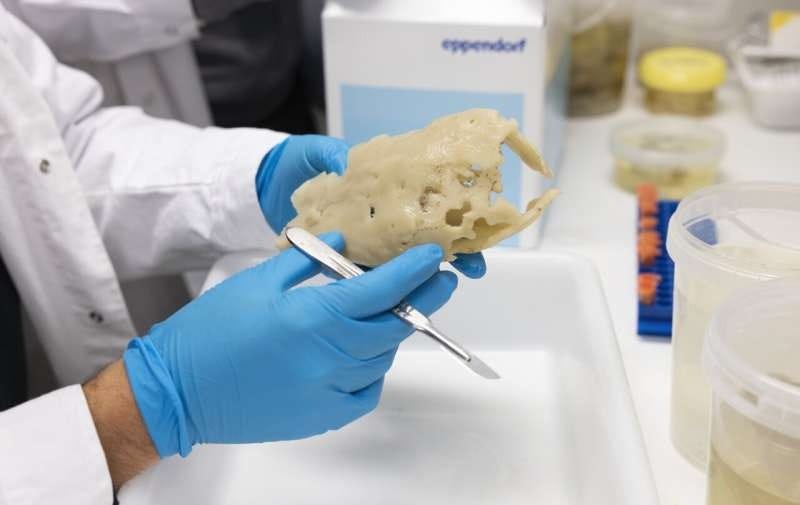
Scientists long hypothesized that the earliest animals on Earth were sponges, and a new study from Uppsala University has strengthened that idea by identifying a new order of ancient marine sponges called Vilesida. Using remotely operated submersibles and chemical analysis, scientists confirmed that Vilesida sterols align with the oldest known animal biomarkers preserved in 600 million-year-old rocks. The results, supported by a 2025 study from geochemists at the Massachusetts Institute of Technology (MIT), provided strong evidence that sponges, and therefore animals, may have evolved at least 100 million years earlier than previously thought. While new species are discovered frequently, only twelve new animal orders (families) have been discovered in the past five years. The team also noted that these newly discovered sponges, like many others, could hold biochemical compounds with potential for developing new disease treatments in humans.