
Congress Out, (Partial) Shutdown On: DHS at the Center of a Partisan Standoff
Roundup: February 9-17, 2026


Happy lunar new year — welcome to the year of the fire horse!
Who’s in session this week?
The House and Senate are both in recess this week for the Presidents’ Day holiday.
Make sure you have the ESP Advisors printable 2026 Congressional Calendar and our public Congressional Google Calendar (updated live) at your fingertips.
News Highlights
Reps. Jefferson Van Drew (R-NJ-02) and Laura Gillen (D-NY-04) introduced the Coastal Trust Fund Act (H.R. 7459), a bipartisan bill to create a dedicated federal funding stream for coastal storm risk management and beach nourishment projects, aiming to provide long-term, reliable investment for communities facing rising seas and intensifying storms.
The White House released America’s Maritime Action Plan to implement Executive Order 14269, “Restoring America’s Maritime Dominance,” outlining steps to expand U.S. shipbuilding capacity, strengthen the maritime workforce, and reduce reliance on foreign-built vessels amid growing competition with China.
The Environmental Protection Agency announced a final rule eliminating the 2009 Greenhouse Gas Endangerment Finding, the legal determination that greenhouse gases threaten public health and welfare under the Clean Air Act. The finding has served as the foundation for federal climate regulations for more than a decade, and its repeal represents a significant shift in how the federal government approaches greenhouse gas oversight under existing law.
…read our full weekly roundup to learn more!

Written by Emily
Congress is out of session and the Department of Homeland Security (DHS) is shut down due to a lapse in funding. Democrats and the White House are trading proposals in a negotiation to pass the DHS funding bill, but the path forward seems murky. Democrats don’t want to budge on reining in authority for Immigration and Customs Enforcement agents, and Republicans feel they have the political upper hand in the shutdown — highlighting impacts to TSA, FEMA, and the Coast Guard and blaming Democrats.
DC and the nation are preparing for President Trump’s State of the Union address on Tuesday next week, which is still expected to occur despite the shutdown.

The House and Senate are in recess. No hearings or markups this week.

Introductions
Rep. Greg Steube (R-FL-17) introduced the Air Quality Act (H.R.7452). The bill would prohibit activities intended to modify weather, temperature, or sunlight intensity.
Reps. Jefferson Van Drew (R-NJ-02) and Laura Gillen (D-NY-04) introduced the Coastal Trust Fund Act (H.R.7459). The bill would establish a dedicated federal funding mechanism to provide long-term, reliable investment for coastal storm risk management and beach nourishment projects.
Reps. Buddy Carter (R-GA-01), Rick Allen (R-GA-12), and Sanford Bishop (D-GA-02) introduced the Farmers’ AID Relief Act (H.R.7462). The bill would amend the USDA’s Hurricane Insurance Protection–Wind Index (HIP-WI) program to require the Secretary of Agriculture to use or create alternative, more accurate data when official storm data are incomplete.
Reps. Ritchie Torres (D-NY-15) and George Latimer (D-NY-16) introduced H.R.7519, a bill that would require U.S. Army Corps of Engineers District Commanders to provide annual briefings to Members of Congress’ offices on Corps-funded or Corps-led projects in the watersheds within their districts.
Sen. Ashley Moody (R-FL) introduced the Temperature Event Mitigation Policy (TEMP) Act (S.3843). The bill would direct the USDA’s Risk Management Agency to research and develop an affordable, temperature-based crop insurance option. Reps. Scott Franklin (R-FL-18) and Salud Carbajal (D-CA-24) introduced the House version of the bill (H.R.7464).
Sens. Ben Ray Luján (D-NM) and Marsha Blackburn (R-TN) introduced the Advanced Weather Model Computing Development Act (S.3854). The bill would authorize and codify a collaborative research partnership between the Department of Energy (DOE) and the National Oceanic and Atmospheric Administration (NOAA) to leverage DOE’s high-performance computing and advanced computational techniques (including AI and large data analytics) to improve weather models and forecasting.
Sens. Maria Cantwell (D-WA), Lisa Murkowski (R-AK), and Dan Sullivan (R-AK) introduced the Tsunami Warning, Research, and Education Act (S.3881). The bill would reauthorize and strengthen NOAA’s tsunami warning and preparedness programs, improve coordination and communication systems, and support continued research and readiness for tsunami hazards.
Rep. Glenn Thompson (R-PA-15) introduced the Farm, Food, and National Security Act of 2026 (H.R.7567). This bill would serve as a new farm bill to update and reauthorize federal agriculture, food, conservation, rural development, and nutrition programs to provide policy certainty and support for farmers, ranchers, and rural communities.
Updates
Rep. Brian Babin’s (R-TX-36) SUSHI Act (H.R.3706) was marked up and passed the House Committee on Natural Resources.
Rep. Buddy Carter’s (R-GA-01) Undersea Cable Protection Act (H.R.261) passed the full House.


Personnel
The nomination of Kevin Lilly to serve as Assistant Secretary of the Interior for Fish and Wildlife was referred to the Senate Energy and Natural Resources Committee and the Senate Environment and Public Works Committee.
The nomination of William Hague to serve as an Assistant Secretary of the Interior was referred to the Senate Energy and Natural Resources Committee.
Administration
The Interior Department and President Trump’s Make America Beautiful Again (MABA) Commission launched the “MABA 250” initiative, outlining a conservation strategy focused on expanding outdoor access and balancing stewardship with economic growth ahead of America’s 250th anniversary.
The White House released America’s Maritime Action Plan, implementing Executive Order 14269, “Restoring America’s Maritime Dominance,” to expand U.S. shipbuilding capacity, strengthen the maritime workforce, and reduce reliance on foreign-built vessels amid growing competition with China.
Congressional Oversight
The EPA announced a final rule eliminating the 2009 Greenhouse Gas Endangerment Finding and repealing federal vehicle GHG emissions standards for model years 2012 and beyond, a move the Trump Administration described as the largest deregulatory action in U.S. history. Senate Committee on Environment & Public Works (EPW) chair Sen. Shelley Moore Capito (R-WV) applauded the rule, while ranking Member Sheldon Whitehouse (D-RI) and 41 Senate Democrats launched an investigation into the EPA, alleging the repeal ignored scientific evidence, public input, and administrative law requirements.
Rep. Zoe Lofgren (D-CA-18), Ranking Member of the House Science, Space, and Technology Committee, wrote a letter to Department of Commerce Secretary Howard Lutnick calling on him to resign after alleging he misled Congress about his contacts with Jeffrey Epstein.
Rep. Zoe Lofgren (D-CA-18) and Rep. Gabe Amo (D-RI-01) criticized EPA’s elimination of its Office of Research and Development, arguing the move dismantles independent science used to protect public health and the environment.
Fisheries and Ecosystems
NOAA Fisheries opened a 25 day period for public comment on pilot program proposals for state-led management of recreational red snapper in Florida, Georgia, South Carolina, and North Carolina. Rep. Bruce Westerman (R-AR-04), Chairman of the House Natural Resources Committee, praised the move as empowering to states, while Ranking Member Jared Huffman (D-CA-02) argued that new Exempted Fishing Permits would allow states to bypass core sustainability standards under the Magnuson-Stevens Act.
NOAA Fisheries shared “seafood love stories,” featuring staff stories on first falling in love with sustainable aquaculture products like mussels, oysters, scallops, and sablefish.
NOAA Fisheries and partners officially launched a real-time Automatic Identification System (AIS) text alert system to improve vessel compliance with speed limits in North Atlantic right whale Seasonal Management Areas, aiming to reduce deadly vessel strikes.
Ocean Science and Technology
The National Science Foundation (NSF) announced that it will transition management of the NCAR-Wyoming Supercomputing Center to a third party as a continuation of the administration's efforts to restructure the critical weather, earth, and ocean science infrastructure.

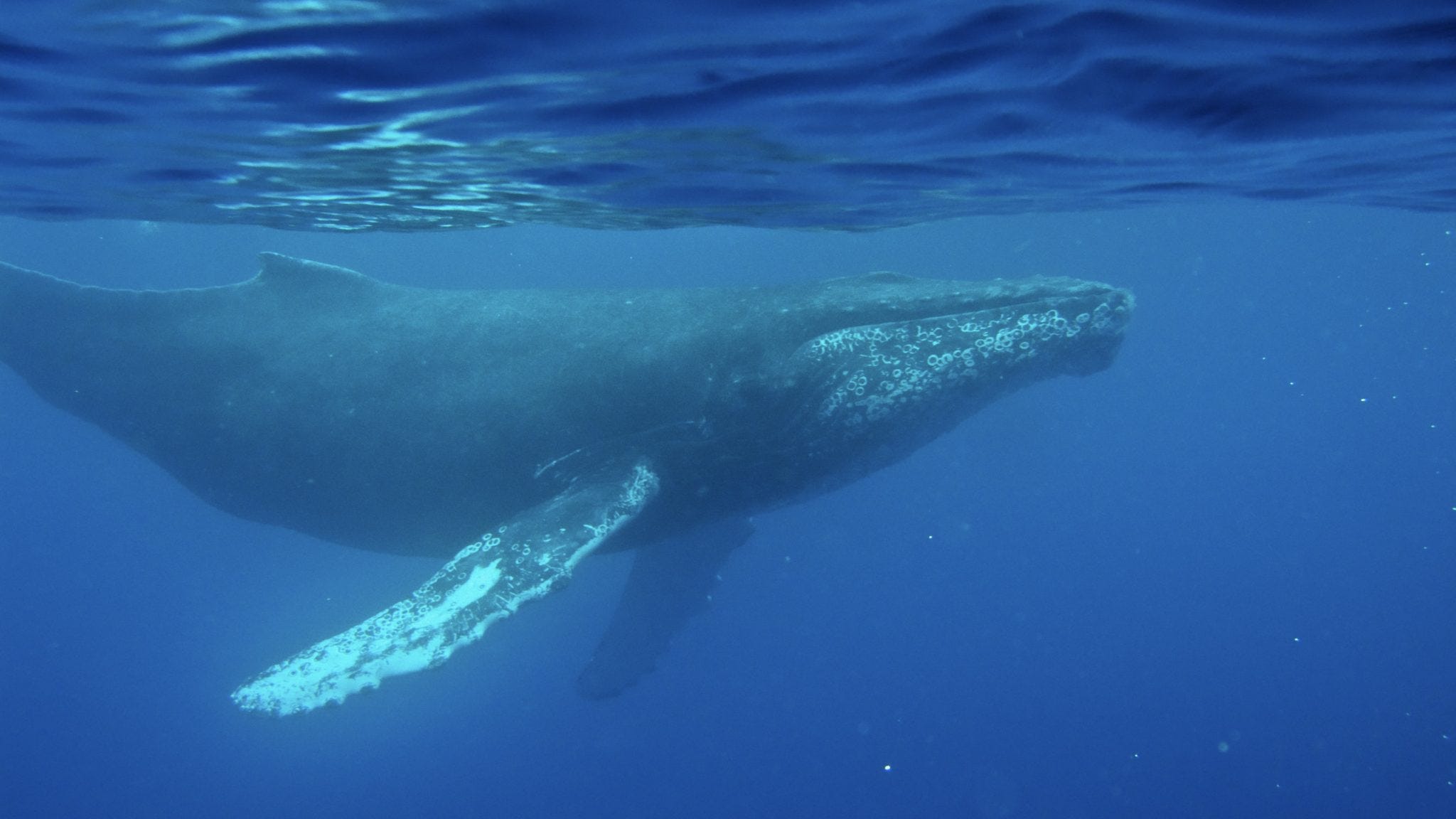
Researchers at Woods Hole Oceanographic Institution (WHOI) in Massachusetts uncovered what is believed to be the earliest audio recording of humpback whales, captured on March 7, 1949 near Bermuda. The recording was etched onto a plastic Gray Audograph disc while scientists aboard the research vessel Atlantis tested early sonar systems and experimented with one of the first underwater recording setups. This mission took place at a time when many ocean noises had yet to be identified as belonging to individual species. Today, researchers deploy autonomous hydrophones, gliders, and real-time acoustic monitoring systems to track whales and build long-term datasets to better understand humpback communication and how the ocean soundscape may have changed over nearly 80 years of increasing human-generated noise. Watch the full video here.